sixcatsdance W. V. Cats sixcatsdance

Hyperthyroidism in Cats

by Margaret Schill

Hyperthyroidism (also called thyrotoxicosis) is a disorder that occurs when the thyroid glands produce an excess of thyroid hormones. The thyroid glands are located in the neck, but some cats also have some thyroid tissue present in the chest cavity. The thyroid hormones are known as T3 and T4. These hormones regulate the body's metabolic rate and affect every system in the body. Excess thyroid hormones that occur with hyperthyroidism negatively impacts all of the cat's organ systems, and untreated will lead to death.

A majority of hyperthyroid cats will have an enlarged thyroid gland. Hyperthyroidism is confirmed by a special blood test to measure the thyroid hormone (T4) level. A cat can have a normal thyroid test yet still have hyperthyroidism. This is because the thyroid hormone level fluctuates throughout the day or it might be early in the course of the disease. Care must be taken in evaluating T4 levels, as the reference range used by labs include young healthy cats. For cats over 10 years of age, T4 levels should be in the lower half of the range. If a cat has kidney disease the T4 may not be elevated and can be at the high end of the normal, yet the cat can still have hyperthyroidism.

If hyperthyroidism is still strongly suspected, a more sensitive test called the T3 suppression test can be performed to confirm the diagnosis. A type of imaging scan of the thyroid gland using radioisotopes, called a technetium or scintigraphic scan, can provide an absolute diagnosis. The equipment necessary for the scan is only available in a limited group of radiotherapy facilities.

A full blood chemistry panel is also done to check if the cat might have diabetes, kidney failure, liver disease or heart disease. Those diseases have some of the same symptoms as hyperthyroidism, and a cat can have hyperthyroidism plus one of the other diseases. It is necessary to know if a cat has problems with other body systems, since that will dictate treatment options.

Many hyperthyroid cats have concurrent chronic kidney (renal) failure that is being masked by the effects of hyperthyroidism.

Hyperthyroidism is one of the most common diseases of middle aged and older cats. Seven years old is generally middle aged for cats, and at ten cats are considered senior cats. All cats in those age ranges should have blood work done, preferably twice yearly, so any problems can be detected early.

Common Diseases of Companion Animals Common Diseases of Companion Animals

by Alleice Summers, DVM

Gives clinical signs, keys to diagnosis, treatments, and information for a variety of diseases of dogs and cats.


Signs and Symptoms of Feline Hyperthyroidism

Not all cats will have all signs and symptoms. The most commonly recognized signs of hyperthyroidism are weight loss, increased appetite and hyperactivity, but there are other signs as listed below.

  • Weight loss- most common sign (Furry, longer haired cats need to be checked physically on a frequent basis to determine if they are getting bony and lost weight, as one can't tell just by looking due to the fluffy fur.)
  • Increased appetite with no weight gain.
  • Decreased appetite (not as common)
  • Frequent Vomiting
  • Increased urination
  • Increased drinking of water
  • Increased activity
  • Diarrhea
  • Lethargy (less common, but would show up in later stages)
  • Poor coat condition (matted, greasy)
  • Excessive shedding
  • Panting or open mouth breathing (indicates the heart or lungs are affected).
  • Irritability
  • Racing heart rate (tachycardia)

An unusual form of hyperthyroidism, called apathetic hyperthyroidism, occurs in approximately 10% of cats with hyperthyroidism. In these cats, the typical signs of hyperactivity and increased appetite are replaced by depression and inappetance. Weight loss may progress at a rapid rate in these cats. In addition to these nonspecific signs, a majority of hyperthyroid cats will have an enlarged thyroid gland.

Thyroid hormones cause a faster heart rate and a stronger than normal contraction of the heart muscle. That leads to the enlargement and thickening of the left ventricle of the heart. If not treated, over time, cats with hyperthyroidism may develop compromised heart function and can wind up with heart failure. Once the underlying hyperthyroidism has been controlled, the cardiac changes will often improve or possibly resolve completely.

Another possible complication of hyperthyroidism is hypertension (high blood pressure). Hypertension can cause damage to several organs, including the kidneys, heart, eyes, and brain. Blindness can occur due to retinal detachment from high blood pressure. If hypertension is diagnosed along with hyperthyroidism, medication can be given to control the blood pressure, which will reduce the risk of damage to other organs or reduce further damage. As in the case of heart disease, after the hyperthyroidism has been successfully treated, the high blood pressure will often resolve.

However, cats with hyperthyroidism will often have already suffered kidney damage and may have developed chronic renal failure (CRF), but the high blood pressure caused by the hyperthyroidism covered up the condition. When the hyperthyroidism is treated and the blood pressure reduced, the underlying CRF may become evident and will require treatment.

An older cat who zooms around with lots of energy may mistakenly be thought to be doing great for his age, but might actually have hyperthyroidism. The excess thyroid hormones cause the metabolic rate to soar, which might cause the cat to become more active, but to the point where it can burn off more than half of its body weight.

Untreated, hyperthyroidism is fatal. If caught early and treated early in the course of the condition, the potential heart, kidney, eye and other organ damage can be avoided. So, do take your cat to the vet as soon as you notice your cat showing some or all of the above listed symptons, especially weight loss or panting.

Causes

Hyperthyroidism is usually caused by a benign tumor on one or both of the thyroid glands. Thyroid tumors can be cancerous, but usually are not.

Researchers say the increase in feline hyperthyroidism may be due to dust from fire-retardant chemicals, polybrominated diphenyl ethers (PBDEs). PBDEs have been shown to alter thyroid hormone levels. Fire retardant chemicals were introduced in the 1960's and have been commonly used in many household items such as furniture, carpets, mattresses, polyurethane foams, electronic products, plastic components of computers and televisions, circuit boards, and textiles. Since cats lick themselves for grooming, they would ingest PBDE dust.

PBDEs are also found in canned cat food, especially in salmon, whitefish and chicken liver. PBDEs have made it into our oceans,rivers and lakes, entering the bodies of fish and marine mammals. Larger fish, such as salmon, are higher on the food chain, therefore accumulating more PBDE. The fat of salmon also tends to accumulate toxins. The second highest PBDE levels were found in chicken liver. PBDEs have been found in ambient air, soils, and sediments.

In a study published in the Aug. 15, 2007 issue of Environmental Science & Technology, researchers took blood samples from 23 cats, 11 of which had hyperthyroidism. They found that the cats with the disease had levels of PDBEs that were three times higher than younger cats, and cats without the condition. Read more about hyperthyroidism and PBDE's at http://wvcats.com/safetyandwellness.html#flameretardants.

A correlation between pop-top cat food cans and increased prevalence of hyperthyroidism has been found, with the belief that the Bisphenol-A-diglyciddyl ether used to line pop-top cat food cans is to blame. It is speculated that the Bisphenol-A-diglyciddyl ether is transferred into food containing oils or fats. Correlation is not proof of cause, but the matter does bear consideration.

Some researchers suspect that soy in food is a contributor to feline hyperthyroidism. (http://www.vet.uga.edu/research/gvs/history/2008/Marshall.php). Soy is found in many canned cat foods, a possible explanation for why canned cat food has been linked to the disease. Soy is also an ingredient in some dry cat foods. Long-term feeding to cats of food with soy as an ingredient could induce chronic low level hyperstimulation of the thyroid gland. That, in turn, could lead to formation of thyroid tumors and feline hyperthyroidism in middle-aged aged cats.

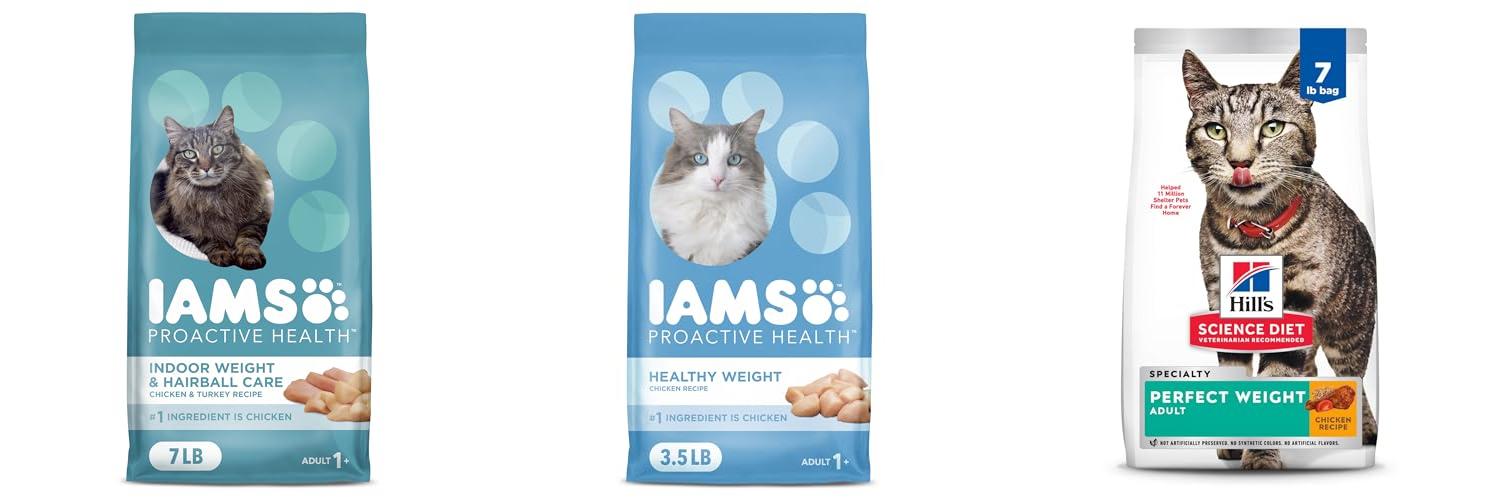
A combination of the above factors would be at play. In consideration of all the above, one would do well to not feed canned cat food with salmon, whitefish, or chicken liver as ingredients too often, if at all, (humans may want to take that same advice for what they eat). It may be best to avoid dry or wet cat food with soy as an ingredient. Do read labels because fish is added to many flavors of cat food, even when the name of the flavor does not mention fish.

It is not recommended to feed only dry food because there are many health risks for cats that eat too much dry food, including diabetes, obesity, urinary tract disease, constipation and kidney disease to name a few. Those illnesses are also very serious. Also, dry cat food uses the same ingedients as canned cat foods do. The only difference would be the avoidance of the pop top of the canned foods, the pop tops which may or may not be a factor leading to hyperthyroidism.

The bedding that a cat usually sleeps on or spends a lot of time on should not be a fire retardant fabric.


Merrick Gourmet Canned Cat Food
- Grammy's Pot Pie, Thanksgiving Day Dinner, Turducken

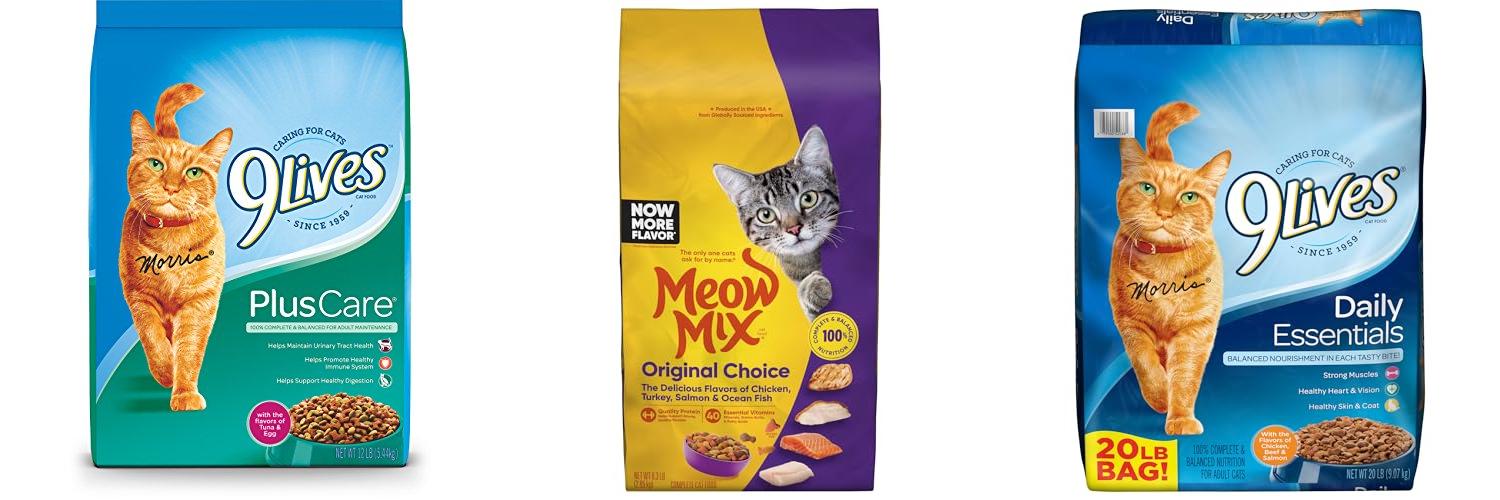
Merrick's canned Grammy's Pot Pie, Thanksgiving Day Dinner, and Turducken have no soy, no fish, and no chicken liver. In addition, the Merrick canned cat foods do not contain by-products.

Felidae Chicken & Rice Dry Cat Food

Felidae Chicken & Rice dry cat food does not contain soy, fish or chicken liver. It is not easy to find a dry food with none of those ingredients, but Felidae made it!


Treatment

Oral medication:

Methimazole (Tapazole®): works by blocking the production of thyroid hormone. Cats need to take the medication daily. The medication does not provide a cure, so needs to be taken for life. Some cats may experience side effects that include vomiting, anorexia, fever, anemia, lethargy and scratching of the face due to itching. The side effects can often be reduced by starting the cat on a low dose, and gradually increasing the dose over several weeks. Rarely, severe liver toxicity can occur. Blood tests are needed every 3-6 months during the lifetime of the cat to check if liver toxicity or anemia has developed. If so, of course, an alternate treatment plan must be developed.

There is a topical version (transdermal gel) of Tapazole that can be formulated by a compounding pharmacy. The transdermal gel is applied to the ear. This may be necessary for cats that are difficult to pill.

Medication is the preferred treatment if the cat has kidney failure or another serious disease that would make surgery too risky or preclude radioiodine therapy, since veterinary staff can only handle the cat briefly the first 2 days after radioiodine therapy and may not be able to administer treatments for other diseases.

Radioiodine therapy (I-131):

Considered a preferred treatment for many cats, since it is curative. It requires only one injection under the cat's skin. The radioactive iodine is taken up only by the thyroid gland and not by other body tissues. The radiation destroys the abnormal thyroid tissue but does not damage the surrounding tissues or the parathyroid glands. The cat must stay at the facility for approximately a week until the radiation clears his body, or is at level deemed to be safe. Radioiodine therapy is only permitted at facilities specially licensed to use radioisotopes, so one might have to travel a distance to get to a facility that can administer the treatment.

In rare cases, cats become hypothyroid, so then need ongoing medication to compensate for that.

Surgery (thyroidectomy)

Surgery to remove the thyroid glands has a good success rate. However, there is a major risk associated with the surgical procedure itself of causing inadvertent damage to the parathyroid glands. The parathyroid glands lie close to or within the thyroid glands and are crucial in maintaining stable blood-calcium levels. Cats with heart disease or kidney failure are not candidates for surgery.

Chemical Ablation:

This is a new, experimental treatment being investigated. With chemical ablation, ultrasound is used to identify the thyroid gland, which is then injected with a chemical or exposed to heat via high radiofrequency to kill the abnormal cells. Although the procedure requires anesthesia, the treatment takes less than 15 minutes.

More information

More information :

http://lbah.com/feline/hyperthyroidism.htm

http://www.peteducation.com/article.cfm?c=1+2130&aid=218

http://www.felinepine.com/vetchat/feline_hyperthyroidism_when_theres_too_much_of_a_good_thing/

http://www.winnfelinehealth.org/health/hyperthyroidism.html

http://www.veterinarypartner.com/Content.plx?P=A&A=516

http://www.thyrocat.com/inside/feline-hyperthyroidism.html

http://www.maxshouse.com/Hyperthyroidism_in_Cats.htm

http://www.radiocat.com/

http://www.peteducation.com/article.cfm?c=0+1275&aid=3332

http://www.vet.uga.edu/research/gvs/history/2008/Marshall.php

http://www.hypurrcat.com/availablepublications2.htm

http://felineoutreach.org/Education/Hyperthyroidism.html

Main Menu


Most cats, but not all, with hyperthyroidism have an increased appetite, weight loss, and hyperactivity. Many cats with hyperthyroidism will drink more than usual and have intermittent vomiting and diarrhea as well.

Helpful items

Pill Pockets for Cats


Pill Pockets take the hassle out of medicating your cat, while providing a healthy treat. These are dough pockets, which are especially great for coating the bitter side of pills lacking the flavored coating, due to being split.

Made from all human-grade meats. Salmon or Chicken flavor.

******

Pet Botanics E-Collars

Versatile E-Collar offers comfort and safety features you won't find in other designs. Features a soft, padded neck for extra comfort. The translucent material allows your pet to maintain his peripheral vision, while the adjustable design and secure snaps let you achieve a perfect fit. You'll want to use an e-collar when your pet has an irritated or wounded area, or after surgery to prevent licking, scratching and biting, to help the area heal safely and quickly

******

Invisible Killers: The Truth About Environmental Genocide
by Rik Deitsch and Dr. Stewart Lonky

This book educates readers about the evironmental toxins that can build up in our bodies, causing disease and even death. Problems are identified, and solutions offered that will help you reduce your toxic burden and live a healthier, longer life.